
Project
FiniteTime - Powerful Time management platform
I. Project Overview and Context
As Lead Software Consultant and Solo Backend Developer, I transformed a product vision into a market-ready SaaS platform. The founder had a strong vision but lacked a working prototype and execution plan. I built a robust backend and infrastructure from scratch, translating the product vision into a solid technical strategy and architecture while managing a UI engineer and designer to deliver a cohesive experience across desktop app, Chrome plugin, website, and PWA-mobile app.
II. Technical Architecture and Infrastructure
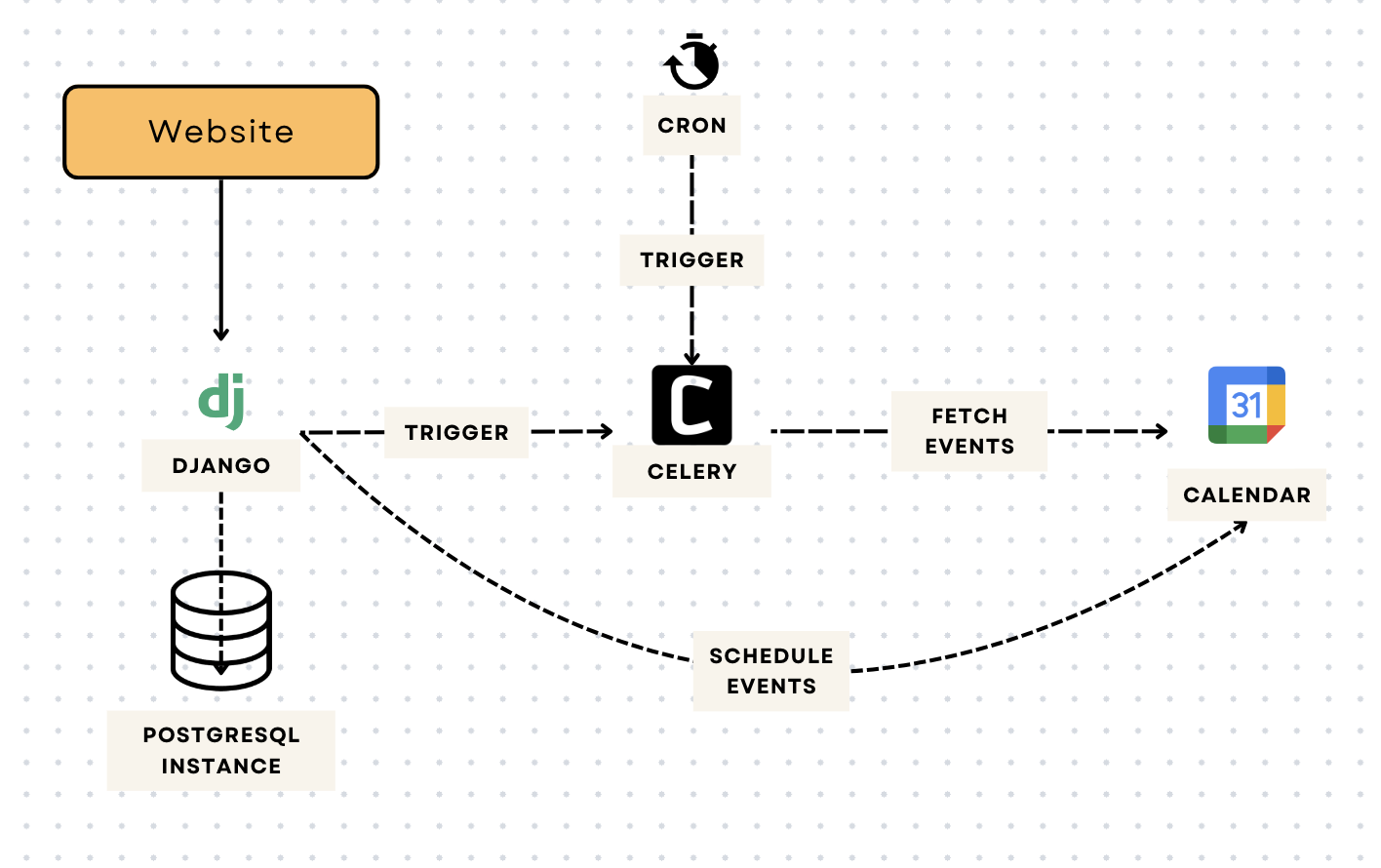
The scalable platform utilizes Python/Django, Celery, and PostgreSQL, architected and hosted on AWS (EC2, S3, SES). I was solely responsible for infrastructure setup, hosting applications, deployment pipelines, and monitoring for both production and staging environments, using Ansible automation for application servers and CI/CD pipelines. Performance optimization included replacing inefficient cron-based calendar sync routines with the Google Calendar Watch API, resulting in a 20% reduction in CPU usage.
III. Key System Capabilities and Features
Key features include reliable time tracking with categories, priorities, and category budgets; a smart scheduling engine that suggests free slots by reading user calendar events while respecting working hours and allocated budgets; "flexi-events" that automatically reschedule if an overlap is detected; and scheduling link sharing with overlap detection and budget enforcement. The platform integrates with Google Calendar, Gmail, Jira, SendGrid, and Timing, with hierarchical syncing of Jira tickets.
IV. Outcome and Impact
The result was a reliable, market-ready backend and production-ready SaaS product that enabled the product to grow and support smooth user collaboration, demonstrating expertise in translating a vague idea into a solid, market-ready product through technical strategy and full-stack execution.